
They Will Sell You Back Everything They Took From You.
Remember when Kim Kardashian dropped a thong with a bush on it?

I promise you, I am not making this up. There were women who saw "faux pubic hair thong" and thought: yes. I need this.
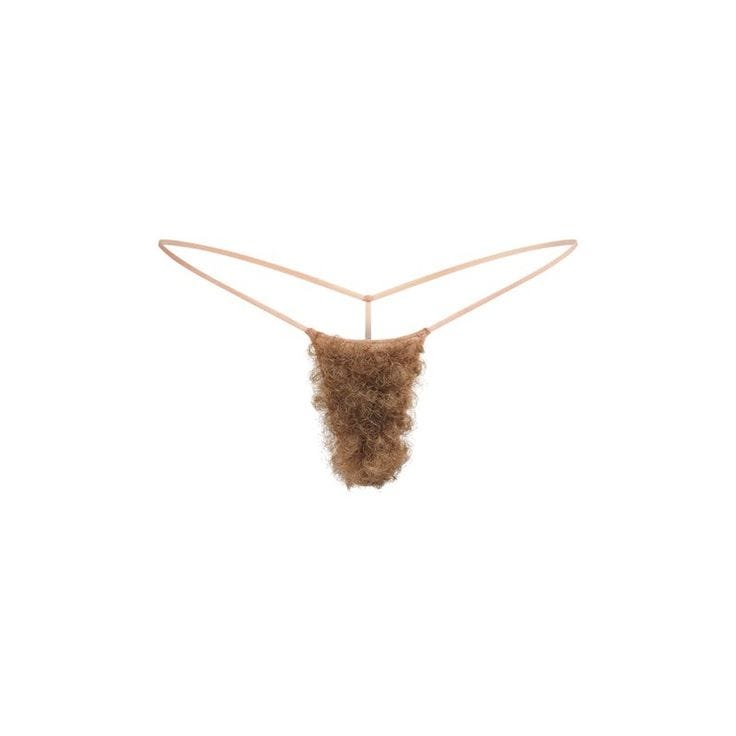
I was and still am absolutely losing it over this because what Kim Kardashian essentially did was walk up to an entire generation of women who spent real money removing their pubic hair — some of them permanently, some of them on laser tables, lying there in paper underwear while a stranger pointed a light at their crotch — and said, here, buy the hair back. Twelve shades. Curly or straight. $32. Waitlist available. The waitlist, by the way, sold out in under 24 hours.
To be honest, I'm not even judging them. That's not where this is going. I just remembered when this happened out of the blue and thought to write about how it wasn't actually a random thing. It is, if you look at it correctly, the most honest thing the beauty industry has ever done. Like they accidentally showed us the entire playbook.
This is the part where I'm supposed to say something profound. Something like "beauty standards are complicated." But I'm not going to do that, because what's actually happening is not complicated at all. It is, in fact, very simple. You are the product. Your insecurity is the inventory and they will sell you back everything they told you to get rid of — at a price.
“Beauty standards” isn't just a cycle of "trends come and go." It's more than that. The cycle is: they identify something about your body, tell you it's wrong, sell you the fix, wait until the fix becomes common enough that it stops feeling special and then retire it. At which point the thing you were told was wrong becomes the thing you're supposed to want again and then they sell you that.
In the nineties, the dream body was essentially a skeleton in a slip dress. Kate Moss. Heroin chic.
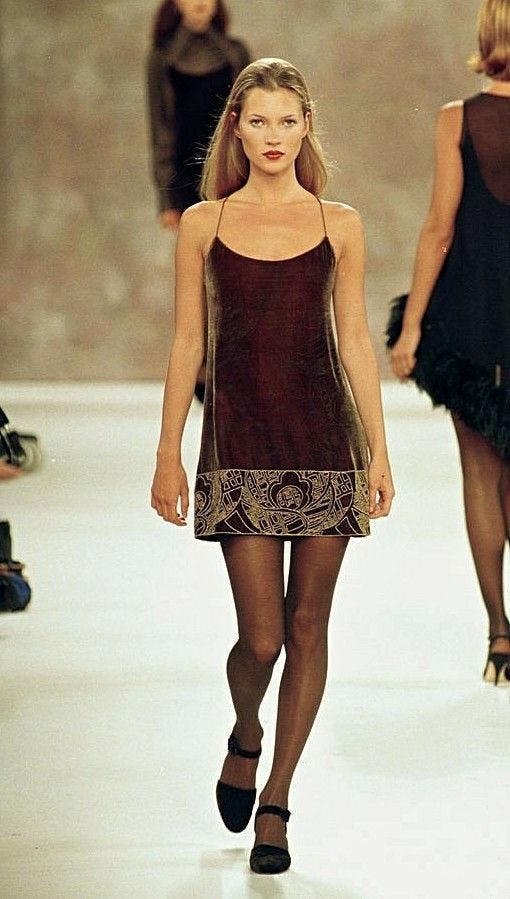
Cigarettes and deprivation as aesthetic choices. Then the late nineties and early 2000s things slightly changed. Video vixens arrived, there was suddenly a market for curves, but it was still a very specific kind of curves: big chest, flat stomach, wide hips, and nothing else. Zero fat where they didn't want it.
The 2010s slowly rolled in. The BBL era. Kim Kardashian. Nicki Minaj. Instagram. The internet decided that a massive butt and a tiny waist was the goal, and a generation of women, including a lot of regular civilians went and got surgery to get there.

The reason BBLs were aspirational for so long is the same reason they're embarrassing now —access changed. When those celebrities had those bodies, it felt exclusive. It meant something. Then regular women started getting BBLs. Everyone had one and the moment everyone has something, the people who set the standards have already moved on and the rest of us are left with permanent surgery that is now considered tacky.
Cardi B went on a podcast(Call Her Daddy) last year and said she already had a reduction.
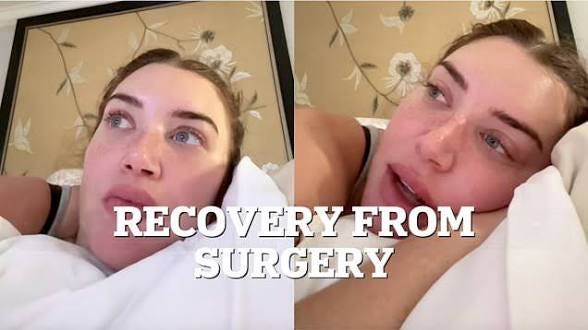
Stassie Karanikolaou — Kylie Jenner's best friend posted from a surgical recovery centre saying getting a BBL was the biggest mistake of her life and that she's had multiple operations trying to undo it.
So what is the body now?
Skinny. Obviously. We're back to skinny.
Vogue Business ran a report and found that less than one percent of looks at the spring/summer 2025 fashion shows featured plus-size models. One percent. After a decade of body positivity and diversity campaigns and brands falling over themselves to say "all bodies are beautiful" — we went back to less than one percent. Guess what was behind it? Just take a wild guess.
That's right —Ozempic. Which is a diabetes medication that became the worst-kept secret in Hollywood before trickling down to anyone who could afford a prescription and a doctor willing to look the other way.
Ozempic started as an expensive, exclusive, whisper-network kind of thing. Celebrities only. Plausible deniability. "I just eat well." Then it became more accessible. Ozempic became something everyone could get. But the pendulum will swing back. Curves will return. Something new will be sold. The standard isn't about the body. It's about what most people can't have. The second most people can have it, it's over.
Then we have the botox era. The beauty industry convinced women, specifically young women, that the solution to aging was to start preventing it before it happened. Start in your twenties, prevent wrinkles. So, women who weren't even up to 25 fell into that trap.
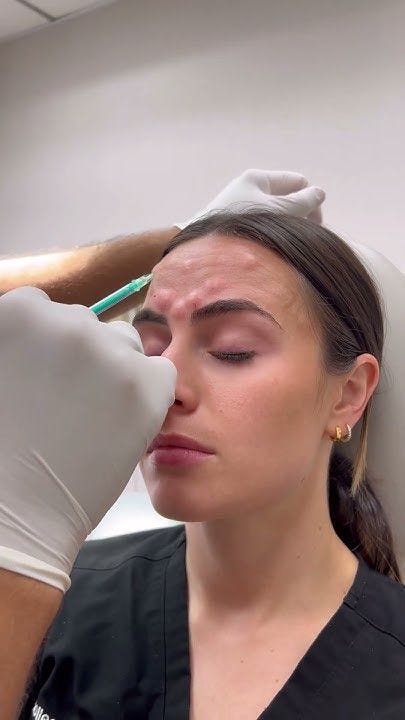
You know what happened next? The "clean girl" aesthetic . Suddenly the frozen forehead was the tell. The pillow face was embarrassing. The filler look was the thing that marked you as someone who tried too hard, who didn't know better, who fell for it.
The new aspiration was looking like you'd never touched anything. Which, to be clear, also costs money. The "natural face" aesthetic requires skincare, treatments, products and consistency and it is not free.
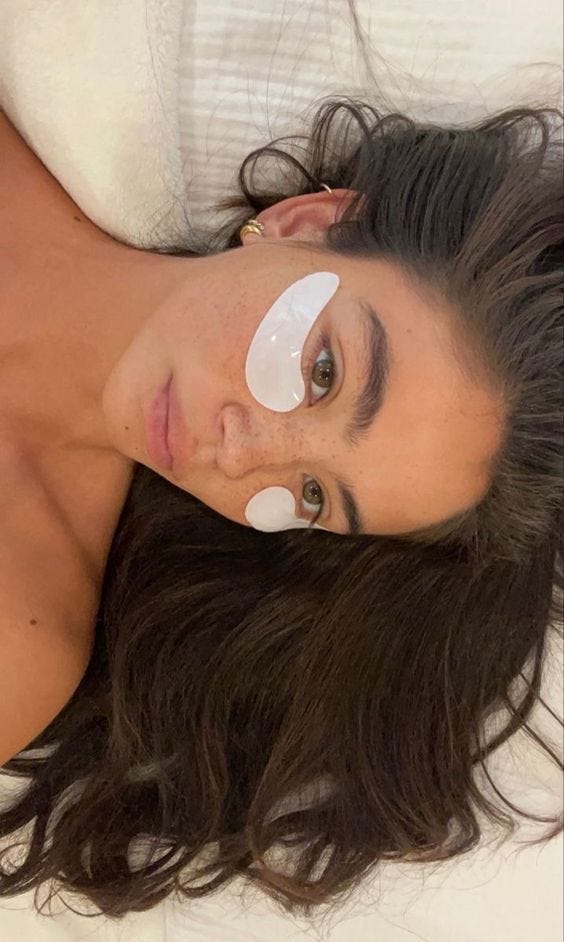
The clean girl was never cheap. She just looked effortless, which is the most expensive look there is, because you're paying for the invisibility of the effort.
Allergan—the company that literally makes Botox is apparently hosting events with influencers to rehabilitate filler's image. Rebranding it as subtle, natural, barely-there.
They didn't change what they were selling. They changed what they told you to want.
Back to the bush thong. Being clean shaven down there was the “standard.” Capitalism created the urge to shave so it could sell shaving products. It sold you laser removal, then Kim Kardashian launched a product that is literally fake pubic hair on a thong and it sold out.
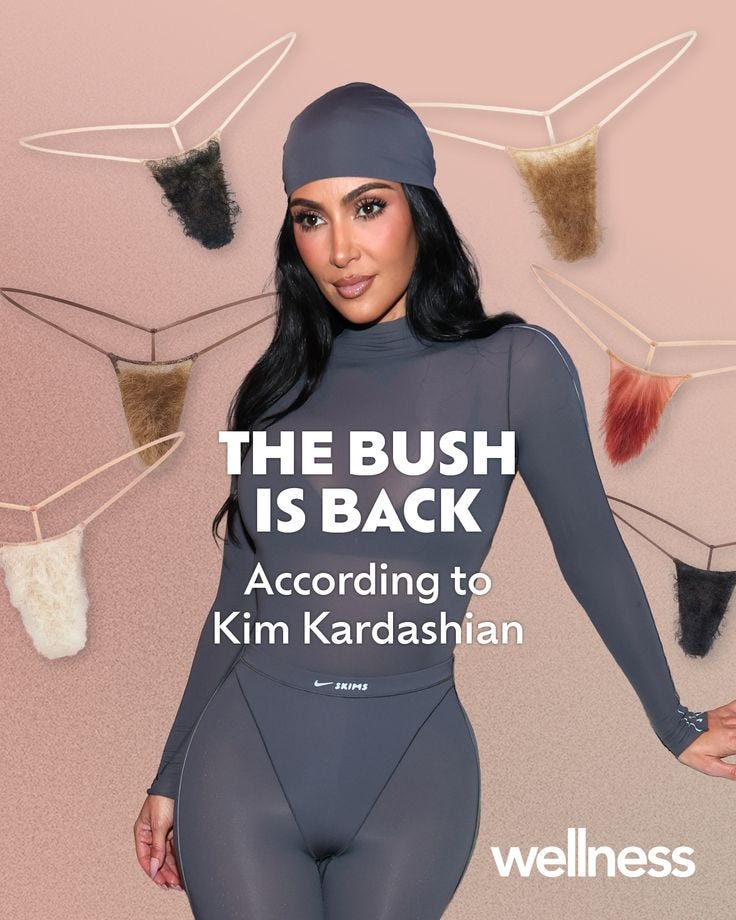
The first question on my lips when it dropped was, “why the hell would anyone buy this?” which is a valid thing to ask. But I think the deeper question would be to ask: Who decided the hair was coming back? Who looked at the cultural moment and thought, now? Now is the time to reintroduce the bush? Who is in the room when these decisions get made and do they know they're running the same play they've been running for fifty years?
The cycle isn't going to stop and it is not because women are stupid or unaware — most of us can see it happening in real time, we talk about it, we write about it, I'm writing about it right now. It's not a knowledge problem.
It's that the cycle is the point. The beauty industry is wired to making you want something you don't have. To make you see it as some kind of insecurity or necessity. The question is if you'll always allow yourself to be played like a ball when a new trend comes along.
Sometimes I feel people should have a grip of themselves and choose what they want not because it was sold to them.
Be in control. Once you can, you wield control too.
You are right, access is why what was sought after is now so ‘out of style’. Elites want what only them can have. Once it is common, it is no longer style. If you like be guinea pig
I can't even comprehend how women keep getting caught in this holes.
We're slowly loosing our features and now everyone is starting to look alike.
Don't forget the veneers, people use to have different unique set of teeth, but now almost every body has gotten veneer.